Competitive Socialising
Where experience becomes performance
We are a hospitality interior design studio for competitive socialising. Strategy, brand, guest journey, and space: designed as one system. We design the venues that define the category. Swingers Crazy Golf, Pop Golf, Funderdome, Lounge by Topgolf. Each performing not only on opening night, but every night after. Built on a single commercial truth: people pay to play together.
17+
Years in the category
27+
Venues delivered
9
Countries on four continents
23
International design awards
 Swingers Las Vegas
 Swingers Dupont Circle
 The Funderdome
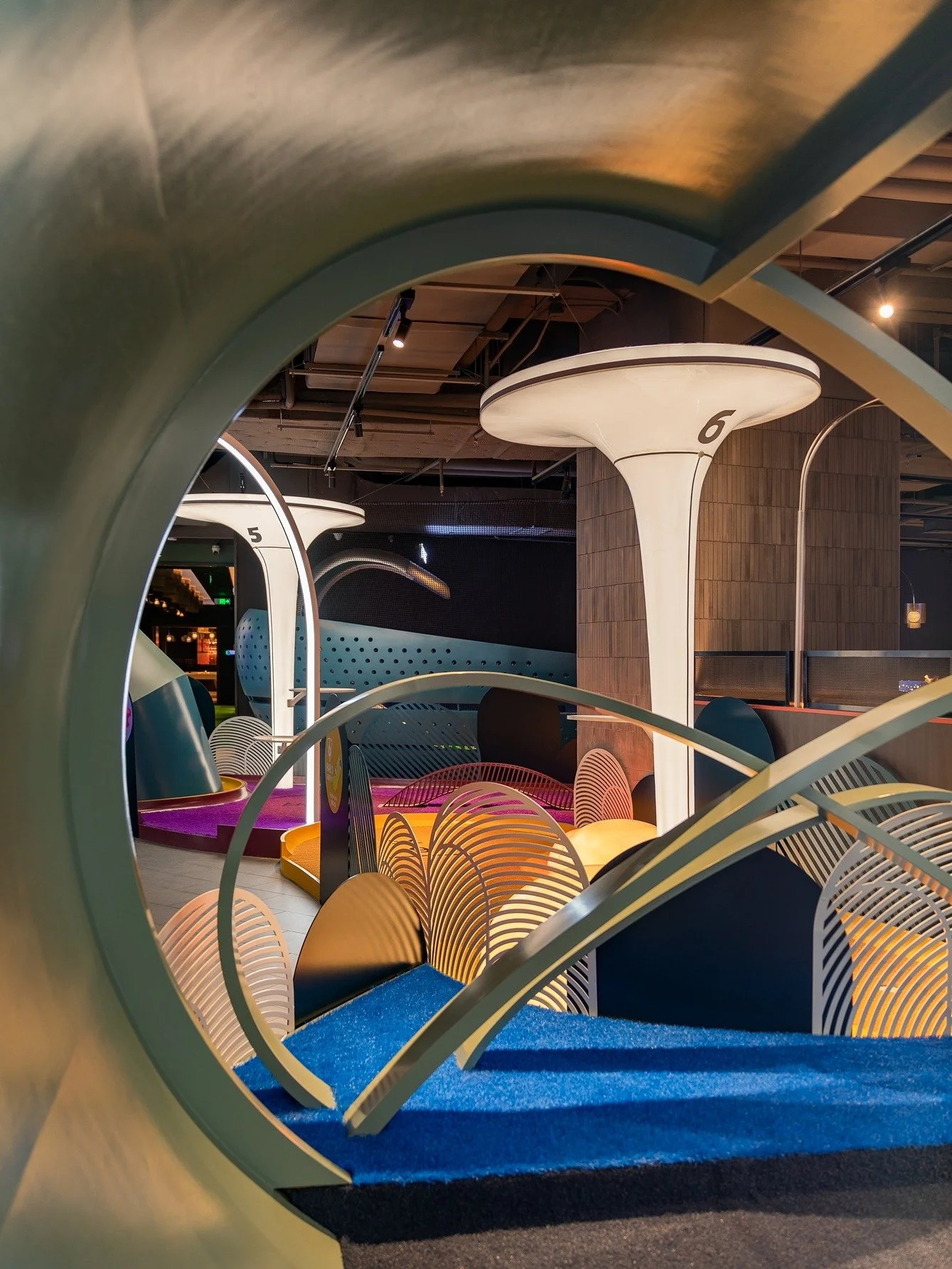 Lounge by Top Golf
 Pop Golf
 Platform Canary Wharf
THE CASE FOR AN INTEGRATED APPROACH
There's a difference between a venue that looks extraordinary and one that performs
Most hospitality interior design firms build for the moment of arrival. What performs beyond it is the system underneath: format, guest journey, brand, and space working as one connected sequence.
We hold that sequence. From the first strategic conversation to the built environment guests move through. Including the decisions that determine whether the venue performs in February as well as it does in December.
A venue is a system. Strategy shapes narrative. Narrative shapes space. Space shapes behaviour. Behaviour drives revenue. Break the chain anywhere, and the venue underperforms.
Zachary Pulman, Founder
Footfall that compounds
A guest experience worth shouting about fills the booking grid six nights a week and holds performance across January. The design work that drives Tuesday occupancy is the same work that protects the full trading year.
Spend per head, doubled
A well-executed competitive socialising venue typically achieves 50-100% higher spend per head than a standalone hospitality venue occupying the same footprint. Game and F&B together extend dwell time at a margin traditional formats cannot match.
IP that travels
A well-designed concept ports across cities and continents. Swingers Crazy Golf proved the playbook. The next ten brands will too.

Eleven-part series
The Competitive Socialising Playbook
Eleven chapters on what separates the competitive socialising venues that compound commercially from those that perform once and plateau. The psychology of play. The commercial mechanics of dwell time. The spatial logic of spend per head. The architecture of a concept that scales.
A new chapter publishes every two weeks. By signing up you will receive the next article in your inbox before it is published. The complete Playbook releases with Chapter 5.
Chapters
- What Is Competitive Socialising?
- The Power of Play: Tactile Nostalgia Reimagined
- The Digital Playground: Immersion and Innovation
- Hybrid Havens: Designing the Physical and Digital Crossover
- Culinary Synergy: Why Food Is the New Anchor
- Cinemas Reimagined: From Big Screens to Big Play
- Retail Meets Play: New Revenue, New Rituals
- Broadening Horizons: Inclusive Audiences and Untapped Markets
- Smart Scale: Designing for Agility and Market Fit
- The Magnetic Middle: Premium Experiences That Travel
- The Flagship Effect: Building Cultural Icons
The work ·
We design the vvenues that define the category
Mini Golf
2021
Lounge by Top Golf
2,698 sq m / 29,041 sq ft
Crazy Golf
2024
Swingers Las Vegas
3,716 sq m / 40,000 sq ft
 Social Hub
2023
Social Hub
2023
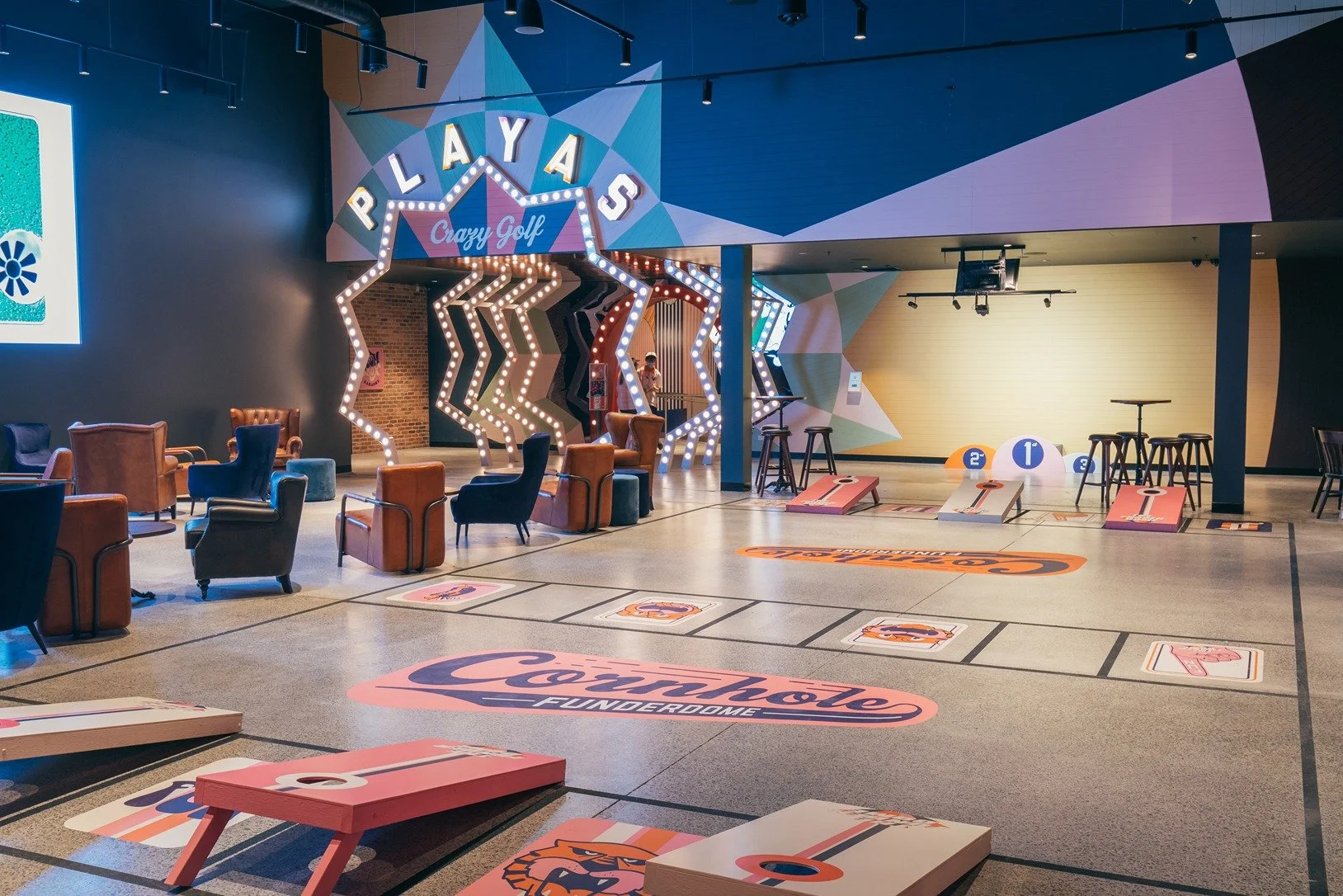
The Funderdome
6,500 sq m / 69,965 sq ft
Crazy Golf
2022
Swingers Dupont Circle
1,824 sq m / 19,633 sq ft
Mini Golf
2023
Pop Golf
231 sq m / 2,486 sq ft
Social Hub
2024
Platform Canary Wharf
438.4 sq m / 4,718 sq ft
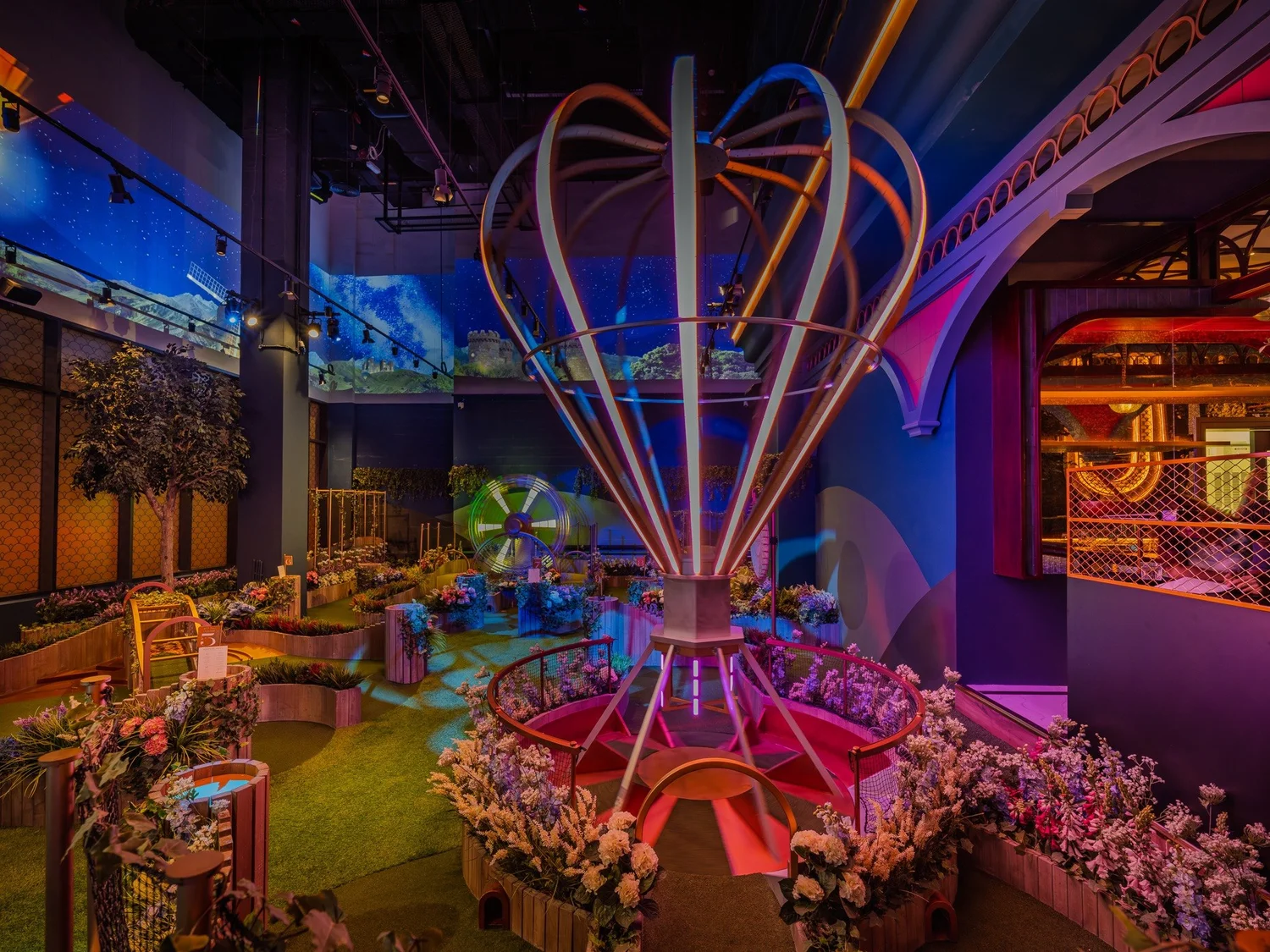 Crazy Golf
2023
Crazy Golf
2023
Swingers Dubai
2,144 sq m / 23,078 sq ft
How we work ·
One studio. One brief. Seven stages.
Strategic Discovery
Context, competition, opportunity
Audience Mapping
Limbic model, personas, group dynamics
Sweet Spot Definition
Product, Service, Culture aligned
Guest Journey Design
Stage by stage, emotionally choreographed
Brand Strategy, Identity & Narrative
Positioning, tone, identity system, storytelling
Spatial Delivery
Architecture, interior design, identity
Scalability Framework
60/40 model, rollout logic
Frequently asked
What operators and investors ask before they brief us
Can't see your question? Good. The interesting ones don't usually make the list.
We have a site and a format in mind. How do you stress-test whether the concept will perform commercially before we commit to the build?
Before any spatial work begins, we run a strategic discovery process that stress-tests the format against the site, the audience, and the unit economics. We look at revenue per square metre, daypart performance, F&B integration, and group mechanics.
Which projects in the portfolio are closest to what we're building, and what were the commercial outcomes?
It depends what you're optimising for. For a flagship urban concept, a reference would be Swingers Crazy Golf, across London, New York, Washington DC, Las Vegas, and Dubai. For a format-led venue, Pop Golf at BOXPARK Wembley. For a cinema-led leisure concept, the Funderdome for Hoyts. We map the most relevant references, and talk through commercial outcomes, in the first conversation once we understand your site and targets.
At what point in the development process does it make most sense to bring ZPDS in?
Earlier than most clients expect. The highest-leverage moment is before the lease is signed, when category positioning, format logic, and unit economics are still open questions.
How do you handle projects where the site or format has already been fixed before the studio is engaged?
We begin with a discovery process regardless. The question is never whether we can add value. It is where.
We are planning a flagship first with a view to rolling out across three to five cities. How do you design for that from the beginning rather than retrofit it later?
The scalability framework is built into the original brief. We design the 60/40 model from day one: 60 percent fixed and travelling, 40 percent responding to city and cultural moment. Swingers is the example, a multi-city hospitality interior design rollout across six venues and three continents.
What does the first conversation with ZPDS actually look like and what should we bring to it?
Bring the commercial problem, not the brief. The site, the market, the audience, and what you need the venue to do financially. We do not need a completed brief to start a useful conversation.
How do you approach a project where brand strategy has already been developed by another party?
We assess how well the existing brand strategy serves the spatial and commercial brief. Where there are gaps, we address them directly. We would rather have that conversation early.
What disciplines does the studio actually cover?
Strategy, brand, guest journey, architecture, and interior design, delivered as one brief. As a commercial and hospitality interior design practice, we cover bar and restaurant design, the spatial concept, and the operating model.